Palm Kernel
Advantages of the product
Palm Kernel Extract is a high quality byproduct produced from the mechanical extraction of oil from the fruit of the Oil Palm. It is a natural high quality stock feed containing 8-11% Oil, 16%-18% Crude Protein and 10.5-12.5 MJ/kg DM (energy) and a completely safe stock feed which can replace grain and/or high quality forages for most classes of livestock. Animals can be easily conditioned to the product and fed free access (ad-lib) without incurring any animal health issues.
- Non GMO foodstuff
- Safe, non acid producing foodstuff (low levels of starch and sugar)
- Excellent source of oil and rumen fermentable fibre which usually improves butter fat test
- Although high in Acid Detergent Fibre (ADF) and Neutral Detergent Fibre (NDF) it does not substitute significantly for grass intake. (i.e. increases total DM intake)
- Good source of minerals especially phosphorus, copper, zinc and manganese.
Experience over many years in Northern Australia has revealed that substituting palm kernel extract in cereal grain concentrates for dairy cows frequently results in higher milk fat test and improved body condition without affecting milk yield or protein percentages.
Excellent free choice vehicle for calcium, trace elements and ionophores for grazing stock.
Commonly Asked Questions & Answers
What are the nutritional specifications?
- Crude Protein - typically in the range of 16-18 %. In comparison to leafy pasture the protein in PKE is slower to be digested, complementing quality pasture.
- Energy - at 10.5-12.5 MJ/kgDM PKE is comparable to energy to cereal grains. However with very little starch PKE is ideally suited to be fed in conjunction with a starch source like cereal grain.
- Fibre - Laboratory tests show that PKE has a high fibre content testing 55-60% NDF. What many of the laboratory tests do not describe however is that a large portion of the fibre in PKE is highly digestible and unlike many feeds the fibre component contributes considerably to the energy content.
- Oil - being mechanically extracted, PKE contains higher oil (8-10%) content than many of the solvent extracted oilseed meals typically used in Australia. Palm Oil is a saturated fat that is largely rumen stable, does not interfere with rumen function or butterfat production. Furthermore palm oil is used to manufacture many of the high value bypass fats fed to cows to improve condition score and fertility.
- Minerals - Calcium 0.45%, Phosphorus 0.8%, Magnesium 0.46% per 2 kgs feeding rate supplies the following amounts of minerals:
Calcium (grams/cow/day) 9.0
Phosphorus (grams/cow/day) 16.0
Magnesium (grams/cow/day) 9.2
- Starch - PKE contains virtually no starch and as such is an ideal feed when energy intake is inadequate but grain feeding is at its limit.
Is PKE suitable to feed to other livestock?
Young replacement stock (post weaning) perform especially well when fed PKE and as mentioned previously has the added advantage of being able to be fed ad lib without the risk of acidosis. It is also suitable to feed to dry cows, beef cattle, lambs and sheep.
What sort of production responses would you normally expect to see from feeding PKE in dairy cattle?
When replacing grain or similar on a 1:1 basis, litres and protein % are generally unaffected, however once feeding rates reach 2.0 kgs/cow/day there is a significant lift in butterfat % anywhere between 0.3-0.7%.
How do I introduce PKE to my herd?
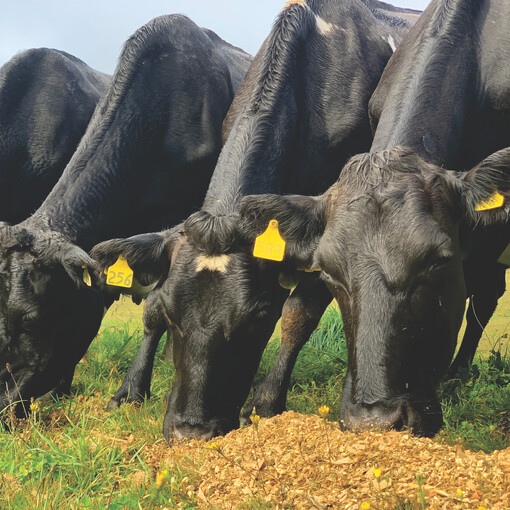
The quickest and easiest introduction of PKE to your stock can be achieved by making the PKE available free access in the paddock to the livestock in a trough or trailer where the stock can eat the product in their own time. This usually results in dairy cattle consuming 1-2 kg's/head/day within 4 days.If feeding in the bail through a silo, it is best to have the PKE mixed 30:70 with your present grain. Then increase the inclusion rate slowly, being guided by their ability to consume the feed.
How do I store PKE on the farm?
PKE is delivered on farm in bulk truck/truck & trailer loads, (either 10/t, 20/t or 30/t approx). As with any grain or meal, PKE needs to be kept dry as moisture combined with heat can cause fungi to grow. Common on farm storage methods are; in a shed or unused fert bin, in a covered pit or on a concrete pad or in a cutting, covered with plastic sheet and tyres, (be sure there is sufficient run off with no pooling of water under the PKE stack). Most farmers order PKE as they need it and therefore use it quite quickly, (say within 40-50 days). The longer you plan to store PKE the better your storage facilities need to be. Being very fine PKE is not suitable for silos unless mixed with other products.